
Jack Moranetz
3D printing has long been a mainstay for prototyping, and the benefits are clear: designers can quickly and cost-effectively iterate on design concepts. The 2009 expiration of Stratasys’ Fused Deposition Modeling (FDM) patents opened the door for innovation and the development of the first low-cost, consumer-grade printers. Starting with the MakerBot Cupcake in 2009, readily accessible 3D printing technology rapidly evolved and expanded to what we all know today.
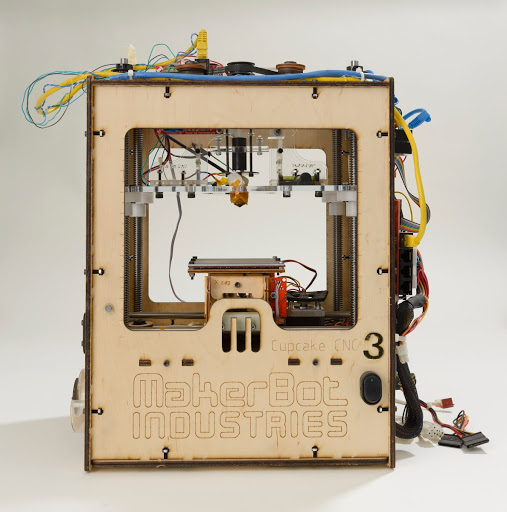
Made from a plywood frame, the Cupcake sold for less than $500
In the nearly two decades since, 3D printing has come a long way. New printing technologies have been developed, improved upon, and perfected. Some of these include (to name just a few) high-speed printing, multi-material systems, metal additive manufacturing, and large format methods.
Here at Pump Studios, 3D printing has become foundational, not just as a product development tool, but also in the products we develop. In 2018 we supported ICON’s development of the Vulcan 3D Printer, which was used to build the first permitted 3D printed home in the United States. More recently we collaborated with Formative 3D on the design of a full suite of 3D printed office furniture for their new corporate HQ. These projects got us thinking about how 3D printing can be used for more than just prototyping.
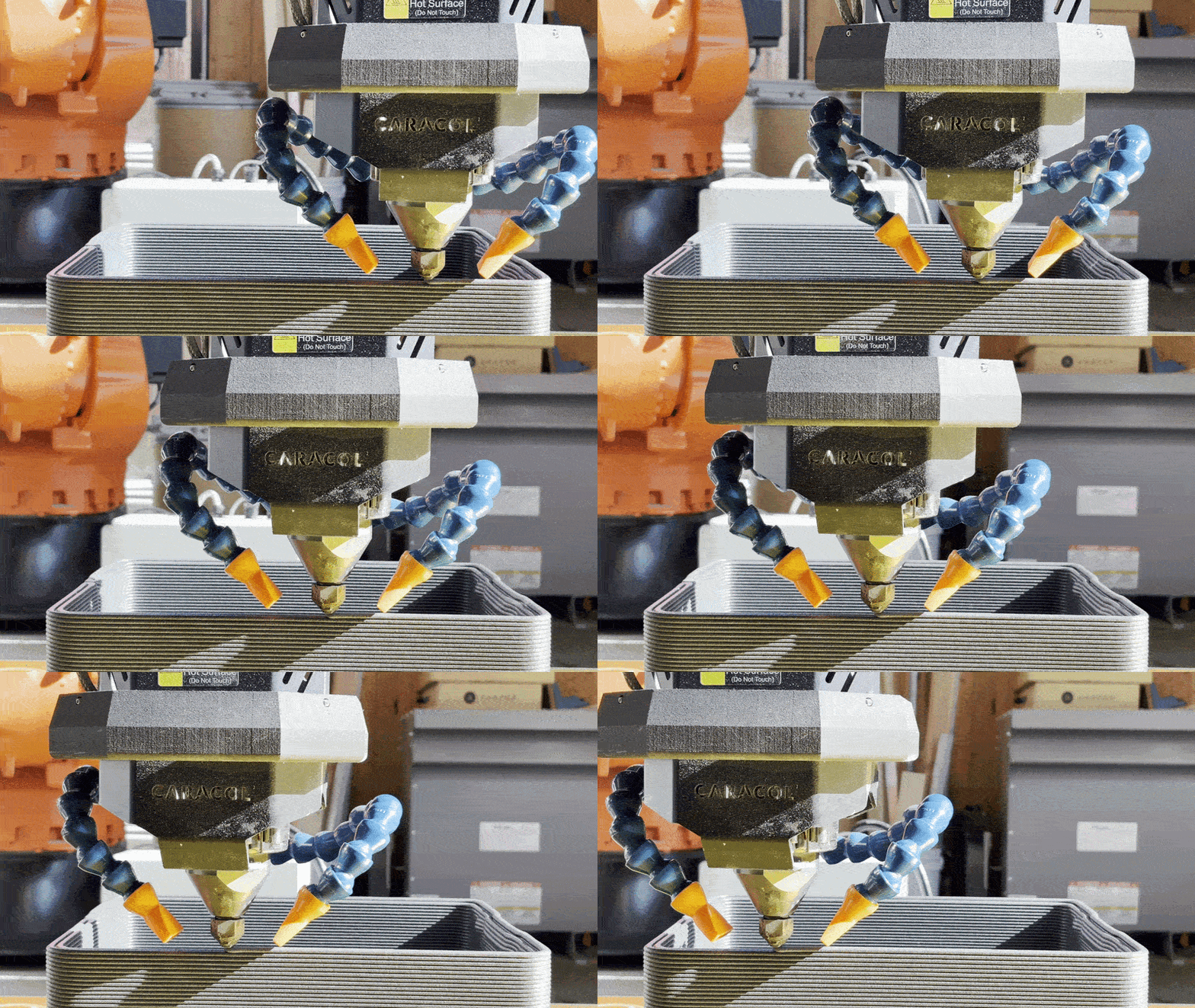
Large Format 3D printing of furniture parts for Formative3D
Many have claimed 3D printing to be the future of manufacturing, replacing nearly all other industrial processes, only for it to fall far short of that expectation. However, we at Pump have noticed the script is starting to flip. 3D printing technologies have found meaningful usage in many specific applications, particularly in the construction, medical, and aerospace industries. Printed parts have even begun to appear in the consumer product industry, highlighted by a recent announcement that Apple Watch Ultra 3 cases are being 3D printed.
Personally, I have spent a lot of time thinking about how 3D printing can add value in the consumer product space (outside of prototyping). In an industry where development is often gated by expensive and long-lead tooling, the potential benefits of 3D printing are many, including:
- Speed to market
- Design freedom (complexity ≠ cost)
Low initial cost (prove the market first) - Adaptability (no tooling modifications)
- No minimum order quantities (on-demand production)
- Mass customization (Tailor parts to specific applications/customers)
I recently worked on a personal project to develop the Chameleon Baren, a niche tool designed for Japanese woodblock printmaking. The product is designed for a small audience of dedicated printmakers who need a more affordable and effective tool. With the goal of serving a small market, low volume manufacturing techniques made perfect sense. I ended up using both SLS and FDM printed parts and paired them with powder-coated sheet metal. This served me well for a few reasons. First, my financial investment was minimal but I could still deliver something useful to other printmakers. Secondly, I was able to take feedback from users and immediately make improvements to the tool. For these reasons, 3D printing worked exceptionally well for me as a production tool.
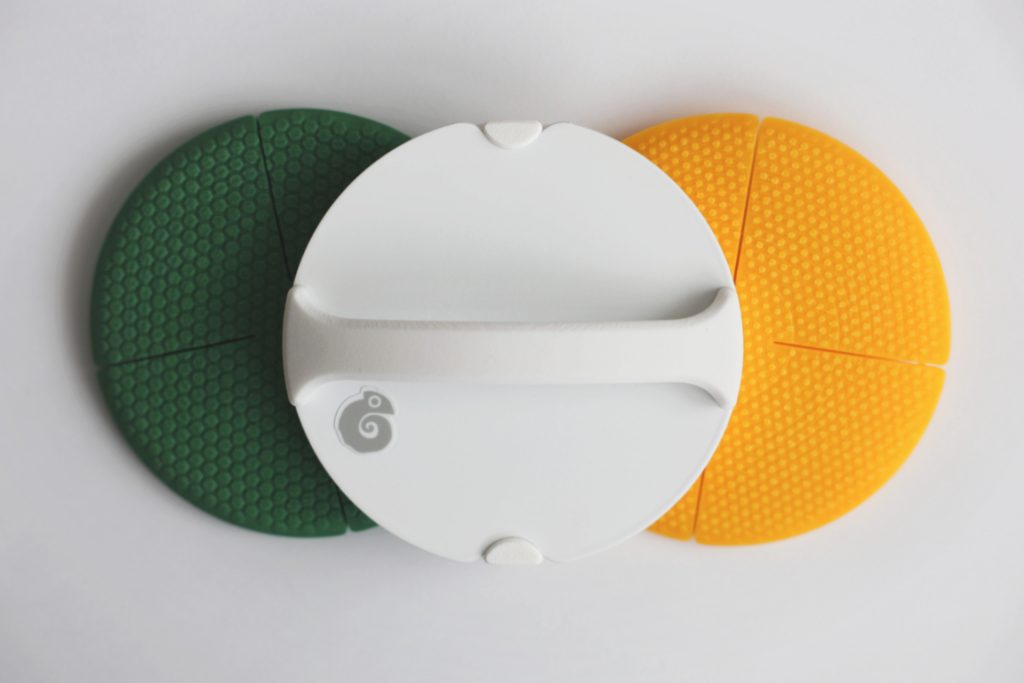
The Chameleon Baren is built from 3D printed parts and laser cut sheet metal
You might be left wondering how this can apply to most consumer products. At the end of the day, 3D printing doesn’t need to replace traditional manufacturing to be impactful. Instead, it should be applied where it makes sense. For the right products, especially those with lower volumes or evolving designs, it unlocks a level of speed and flexibility that’s hard to achieve otherwise. In that way, it’s less about the future of manufacturing and more about expanding what’s possible today.